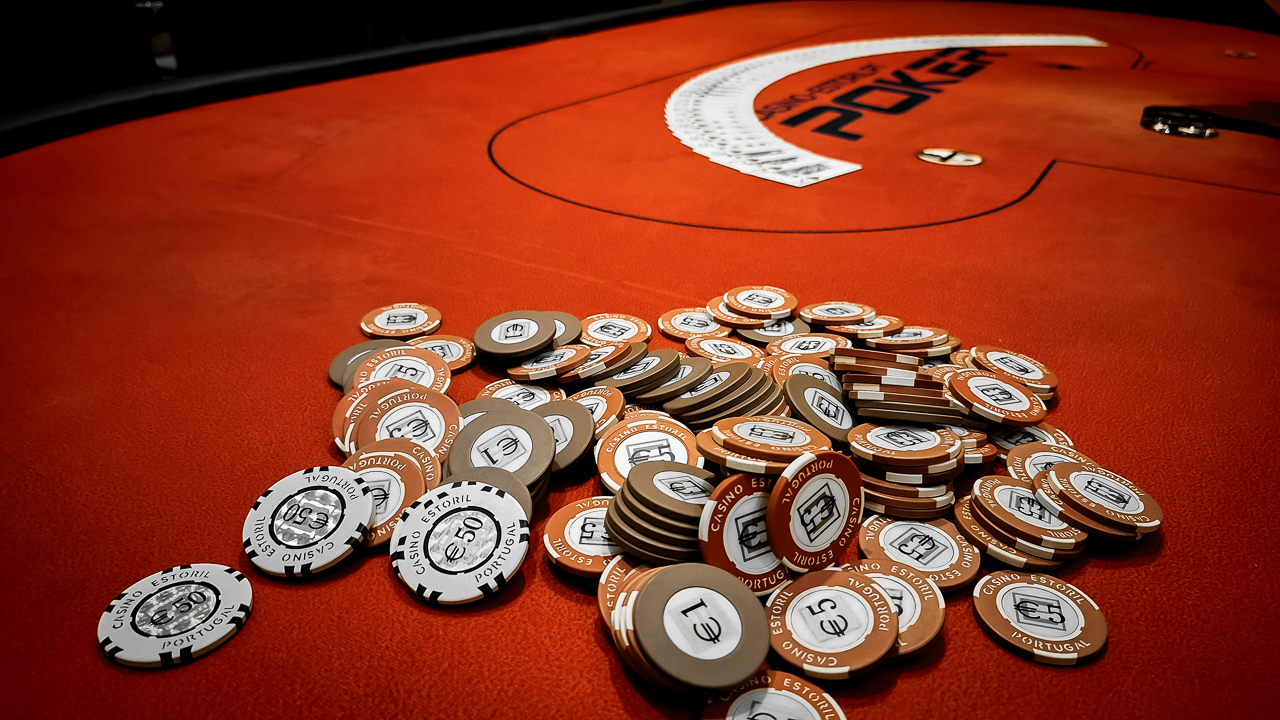
How Do Casinos Make Money on Poker? Rake, House Edge and RTP Explained
If you follow tournament results, buy-ins, and player rankings, you already understand one side of poker economics: the money flowing through prize pools. But there is a quieter side that shapes long-term ROI just as much, and that is how the room itself earns. Poker rooms do not beat you the way a blackjack table beats a player. They earn through a different mechanism, and that mechanism behaves nothing like house edge or RTP.
This guide explains rake, house edge, RTP, and gambling odds in language built for poker readers. The goal is simple: separate the math of player-vs-player games from the math of house-banked games so you can read both correctly.
Poker Is Different Because the House Usually Is Not in the Hand
In a poker hand, the operator deals the cards, runs the software, and supplies the structure. It does not play against you. Your opponents are other players, and the money you win comes from them, not from the room. That single difference reshapes the entire economic model.
In most casino games, the situation reverses. The player faces the house or a random system, and the operator’s margin is built into the rules and payouts. For poker readers comparing live cardroom rake with the broader game libraries at online casinos in Canada, the key distinction is structural: poker rooms charge for access to the game, while many casino games build the operator’s margin into the rules of play.
Quick contrast
- Poker: players compete against each other; the room earns a fee.
- Casino games: players face the house or a random number generator; the house maintains a long-run mathematical edge.
That framing matters because the same word, “casino,” describes two very different revenue models running side by side under one roof or one platform.
Rake vs house edge in simple terms
Rake is a service fee. House edge is a built-in mathematical advantage. They look similar from a player’s wallet, but they work in opposite directions.
| Concept | Where it lives | How the operator earns |
| Rake | Poker rooms (live and online) | Takes a share of pots or tournament entry fees |
| House edge | Casino games (blackjack, roulette, slots) | Earns a long-run statistical margin from game rules |
| RTP | Casino games, typically slots | Long-run average return to player; the inverse view of house edge |
The takeaway is small but important. Rake does not care whether you win or lose the pot, only that the pot exists. House edge does not care whether you win or lose a session, only that you play enough hands.
How Do Casinos Make Money on Poker?
For poker specifically, the answer comes down to two main mechanisms. PokerNews defines rake as the poker room fee taken from cash-game pots or tournament buy-ins, which is the primary engine of poker room revenue (source).
Those two mechanisms break down like this:
- Cash-game rake: a share of each pot, often capped, sometimes collected by time instead.
- Tournament entry fees: a portion of the buy-in that goes to the operator rather than the prize pool.
Both are fees for hosting a game between players. Neither one requires the room to win a hand or to beat anyone at the table.
Cash-game rake
Cash-game rake comes in several flavours, and the structure varies by stake.
- Pot rake: a percentage of each pot, usually with a cap.
- Time collection: a flat fee per period of play, common at higher stakes.
- Fixed rake: a set amount per hand, regardless of pot size.
The cap matters more than the headline percentage. A 5% rake capped at a low number behaves very differently at a small-pot table than at a deep-stack game. Effective rake, meaning what you actually pay across many hands, is the number a serious player tracks, not the advertised rate.
Tournament entry fees
Tournament buy-ins are usually split into two parts. One portion goes to the prize pool, and the other is the entry fee that the room keeps. A listed buy-in is rarely a pure prize-pool contribution.
That split is the operator’s tournament revenue model, and it lands on a player’s expected return before the first card is dealt. The same skill edge applied across two different fee structures produces two different ROI curves.
Why rake matters for poker ROI
A winning poker player has to do two things at once: out-decide the opponents and out-earn the fee. Skill can be real and still get eaten by structure if the rake is heavy relative to pot sizes, or if the field is too thin to absorb the cost.
For tournament regulars: the fee portion of a buy-in is a constant headwind. Field strength can swing your edge; rake structure cannot be out-played.
That is the practical reason rake gets discussed so often in poker-economics conversations. It sets a floor under how much edge you need before you start netting profit.
What Is a Casino’s House Edge?
House edge is the long-run mathematical advantage the operator holds in a house-banked game. Wizard of Odds defines it as the ratio of average loss to the initial bet, which is why it should be read as a long-run game property rather than a prediction for any single session (source).
Unlike rake, house edge is not a separate fee. It is woven into the rules and payouts. When a roulette wheel pays 35-to-1 on a single number while the true odds are 37-to-1 or 38-to-1, the gap is the edge. Nothing is added on top; the math is already inside the game.
Why blackjack, roulette, and slots are different from poker
Each house-banked game has its own way of generating the edge.
- Blackjack: rules around dealer behaviour, payouts on naturals, and player options (doubling, splitting, surrender) determine the edge for a given strategy.
- Roulette: the green zero (or zeros) creates the gap between payout odds and true odds.
- Slots: payout tables and symbol weighting determine the long-run return.
In all three, the player’s role is structurally limited. Skill exists in blackjack to a degree, but the upper bound of decision-making cannot remove the edge entirely under standard rules. In poker, by contrast, decisions are the whole game, and the opposing decisions belong to other players.
Why the edge is long-term, not session-by-session
House edge describes what happens over many thousands of decisions, not the next ten. Short sessions can run dramatically against the math in either direction. A blackjack player can leave up several buy-ins; the next ten players can lose; the average across all of them still trends toward the designed edge.
This is the same logic poker players already apply to variance, just with a different shape. The casino’s math is patient. So is variance.
What Does RTP Mean in Gambling?
RTP, return to player, is the percentage of stakes returned to players as prizes over a significant number of plays. The UK Gambling Commission explains RTP as an average return over a significant number of game plays, not a promise about any single session (source).
RTP and house edge are the same number from opposite directions. A 96% RTP implies a 4% house edge over the long run. The two terms describe one underlying truth.
RTP as a long-run average
The word “average” is doing heavy lifting. RTP is the result of a designed return baked into the game, measured across volumes of play that no single session reaches. An actual return in a short window can sit far above or far below the designed number without telling you that anything is broken.
A poker analogy lands here: a solver-approved decision can lose on a given hand without changing the fact that it was correct. RTP is the slot equivalent of EV, except the player is not making the decisions.
Why RTP does not predict a single session
A high RTP does not guarantee a winning night. A low RTP does not guarantee a loss. The number describes a long-run tendency, not a session forecast.
This is the same mistake poker players see at the tables when someone treats a single tournament result as proof of a player’s skill, or a single downswing as proof of a leak. Sample size rules everything.
RTP vs volatility
Two games can share an RTP and feel completely different to play. The difference is volatility, the pattern of how often and how large the returns are.
- High volatility: rare hits, larger payouts when they land. Long dry stretches between meaningful results.
- Low volatility: frequent smaller returns. Sessions feel steadier and tend to last longer for a given bankroll.
Neither pattern is inherently “better.” Volatility describes shape, not size. RTP describes size, not shape. Reading both at once is how casino math is supposed to be read.
Is Poker Gambling or Skill?
Poker sits in a category that does not fit cleanly on either side of the line. Cards are random. Opponents are not. Decisions are constant, and the outcome of any single decision is filtered through chance.
Research indexed in PubMed has examined the skill-versus-chance question in poker and cautions against treating short, controlled outcomes as pure skill signals (source). In other words, the question does not resolve neatly, because the underlying activity contains both elements at once.
Why does poker include both chance and decision-making
Players do not control their cards. They do control:
- Position
- Bet sizing
- Range construction
- Hand reading
- ICM-aware decisions in tournaments
- Table and game selection
That list is not exhaustive, but it is enough to show why two players sitting in the same seat over the same year can produce wildly different results. The cards are randomized; the decisions around them are not.
Why tournament results need large samples
A single deep run, or a single early exit, says very little about a player’s actual edge. Tournament variance is large because fields are big, structures concentrate prize money at the top, and a deep run requires winning a long sequence of all-in spots.
The Hendon Mob Poker Database describes itself as a comprehensive source for poker players, venues, festivals, events, and results (source), and that breadth is exactly what makes it useful for sample-size reasoning. Looking at one cash is noise. Looking at a multi-year live tournament record alongside field sizes and event structures gets closer to a signal.
What Are Gambling Odds and How Should Poker Players Read Them?
Odds are a way of expressing probability, risk, and expected return. The catch is that “odds” means different things in different settings, and poker players already use a version of odds that casino-game players do not.
Pot odds vs casino odds
Pot odds describe the price the pot is offering you to continue with a hand against an opponent’s range. They are dynamic, situational, and tied to incomplete information.
Casino odds, by contrast, are usually structural. The probability of hitting a number on a roulette wheel is fixed. The payout for that number is fixed. There is no opponent making decisions in response to your bet.
One way to remember it: poker odds answer a strategic question; casino odds describe a game property.
That distinction matters because the two get mixed up in casual conversation, and the math behind them works on different inputs.
Expected value, variance, and sample size
Expected value, EV, is the average outcome of a decision repeated infinitely. A +EV decision can lose. A -EV decision can win. Over enough trials, results trend toward EV; over a small window, they do not have to.
This is the single most important concept connecting rake, house edge, RTP, and pot odds. All four are long-run averages. None of them predicts the next hand, spin, or session.
Why “best odds” claims need context
“Best odds” depends on game rules, payout structures, fees, strategy assumptions, volatility, and what the player is actually trying to do. A game with a lower house edge can still produce a losing session. A lower-rake poker room does not guarantee profit; it just lowers the headwind.
The honest answer to “which game has the best odds” is usually a question back: best odds for what kind of session, played how, over what sample?
Practical Takeaways for Poker Players
The math behind rake, house edge, RTP, and odds is not complicated once the categories are clean. The trap is mixing them up, treating one as the other, or expecting any of them to predict a session.
Read the fee structure before judging ROI
Two tournaments with the same buy-in can have different fee splits. Two cash games at the same stakes can have different rake caps. The fee structure changes the math before any hand is played.
- Pot rake vs time collection
- Capped vs uncapped rake
- Entry fee as a percentage of total buy-in
- Speed of structure (turbo formats compress everything, including the value of decisions)
A serious poker player tracks effective rake the same way a casino-game player should track effective house edge: as the actual cost of playing, not the advertised rate.
Treat RTP and house edge as math, not predictions
RTP, house edge, and pot odds are all long-run statements. They describe tendencies across thousands of trials, not outcomes for the next one. Reading them as forecasts is where most player-math mistakes start.
The cleaner mental model is the one most poker readers already use for tournament variance: the math is the math, the sample is the sample, and the gap between the two is where short-term experience actually lives.